
Key Resources
The HL Hunt platform comprises many different resources that fit together. This guide describes HL Hunt's Key Resources and how they relate to one another.
Applications
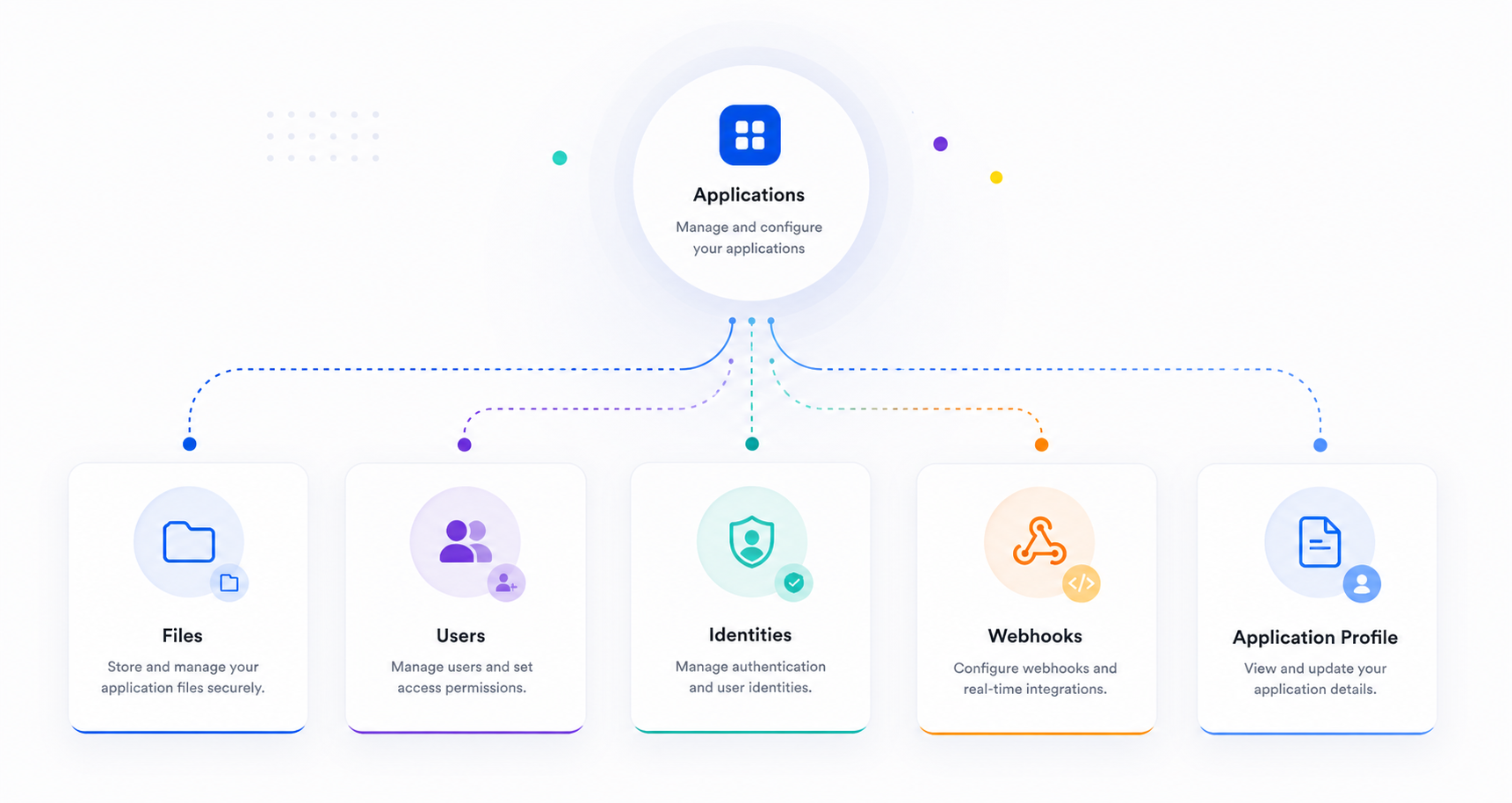
The Application resource represents your own business or platform within the HL Hunt system. As this represents you, it is your root entity and most resources will include an application.id that points back to you.
Several resources are direct children of Applications, including Users, Identities, and Webhooks.
Identities
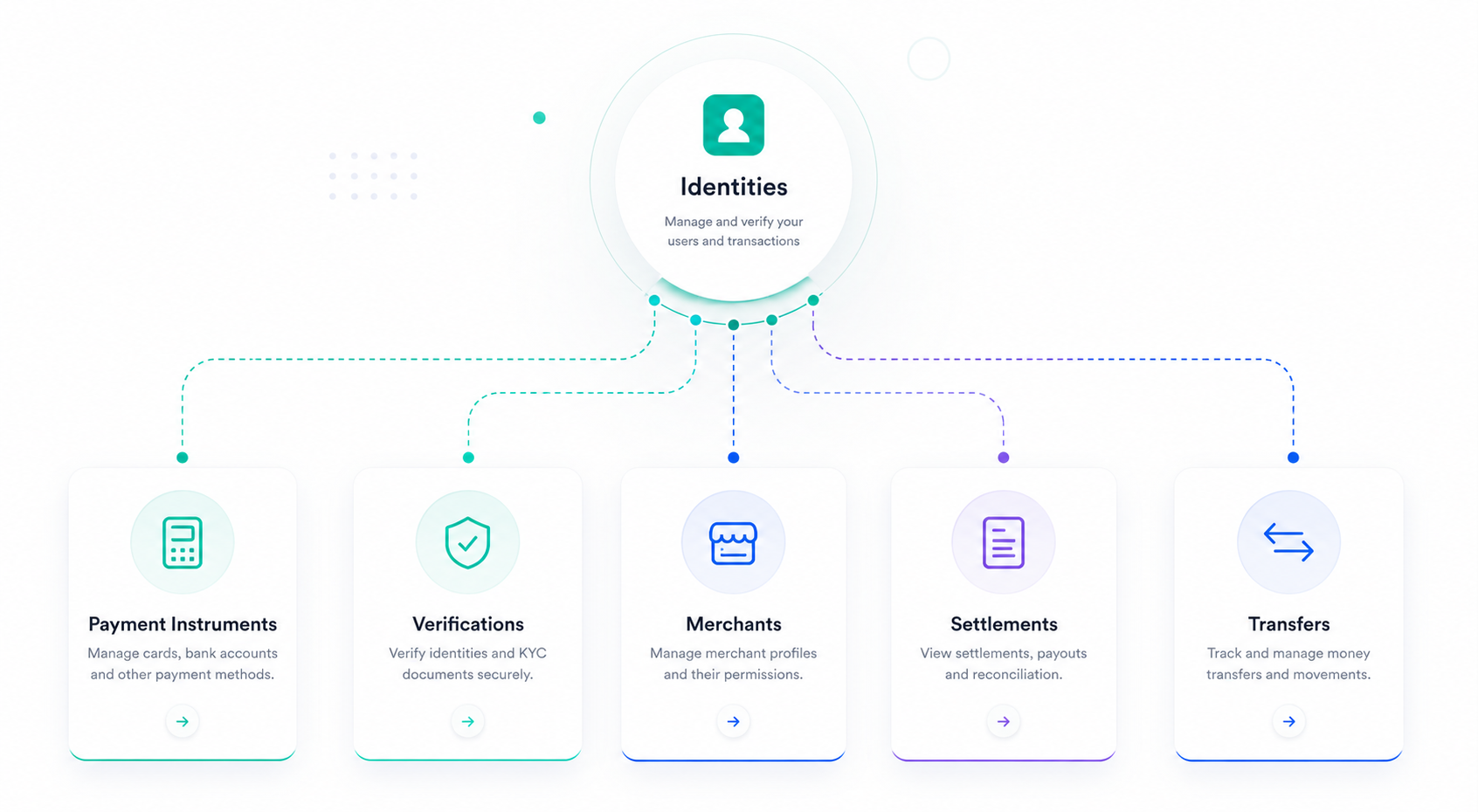
The Identity resource represents either an individual or business, and stores their information. You will create Identities for both the sellers and service providers you board to process payments, as well as their buyers:
- For sellers/merchants: the Identity resource includes Personally Identifying Information (PII) required for compliance and underwriting purposes, and they will go through the onboarding process before they can accept payments.
- For buyers: the Identity resource can store any information you choose to include, such as their names, emails, addresses, or phone numbers.
Identities are central resources that link many other resources together — payments (Transfers) and payment methods (Payment Instruments) get created under and linked with an Identity.
Merchants
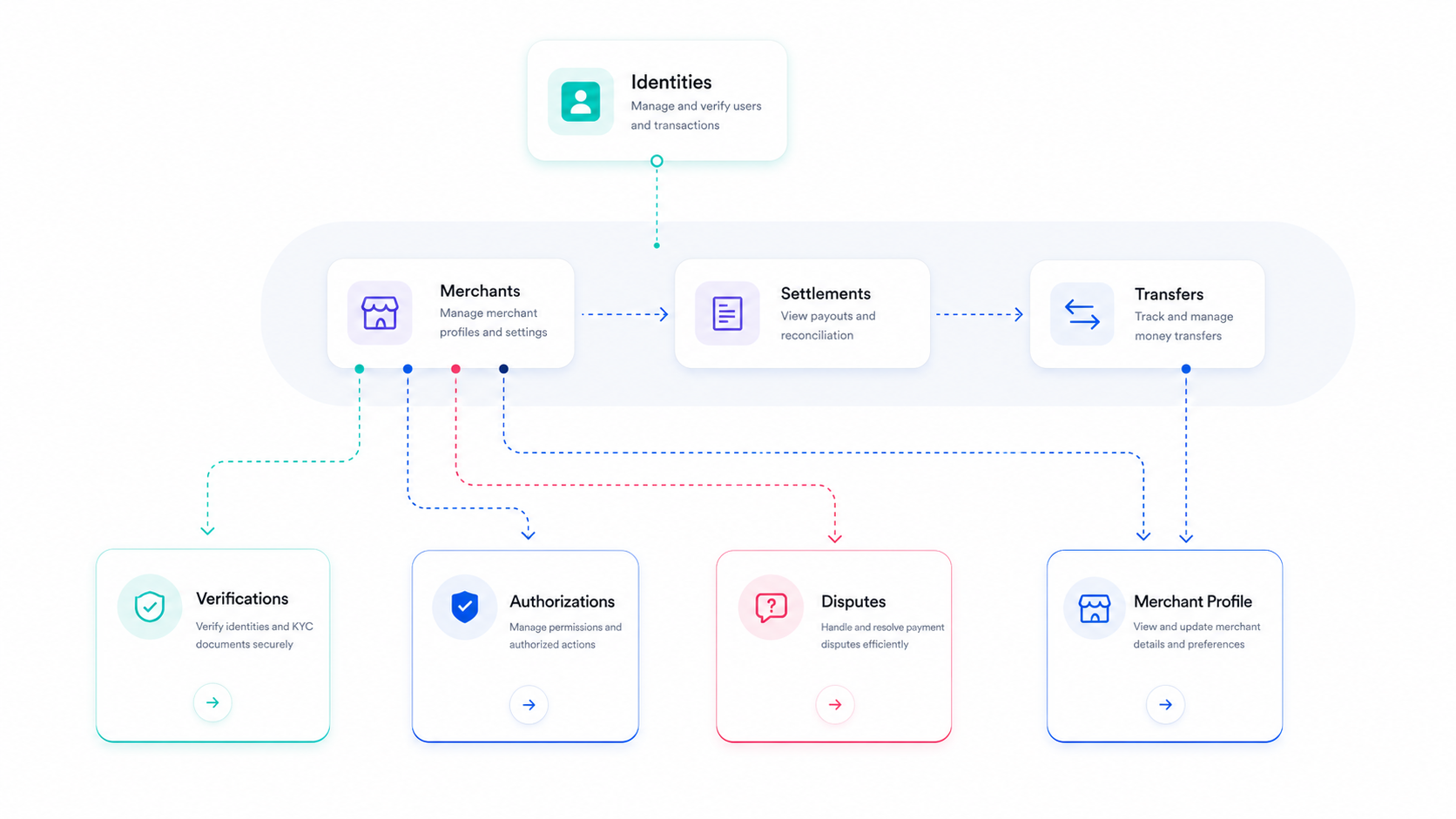
The Merchant resource represents the ability for an Identity to process payments. An Identity can only have one merchant resource. The Merchant is created after the Identity completes the onboarding and underwriting process.
Payment Instruments
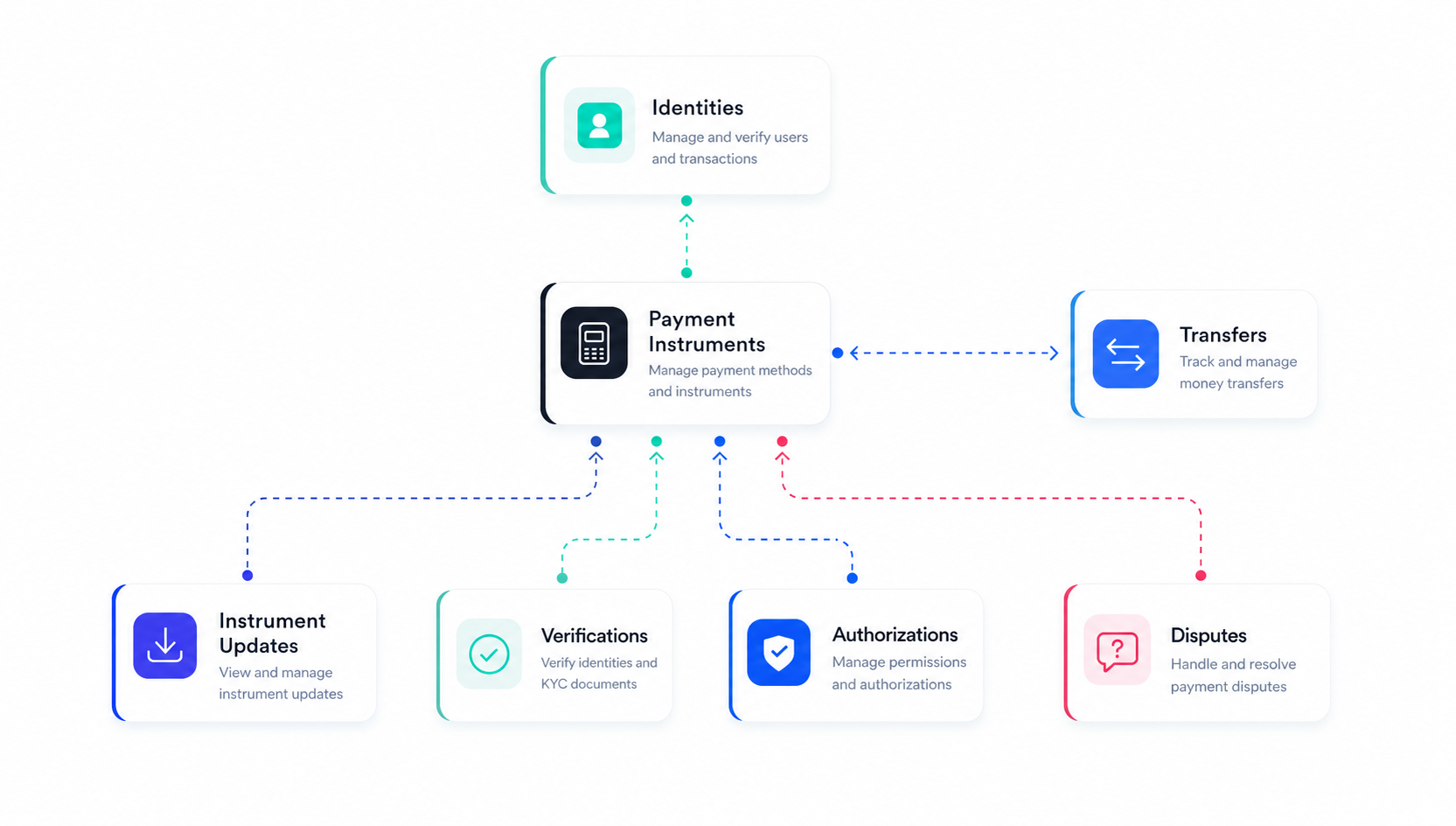
The Payment Instrument object represents a payment method (e.g., credit cards, bank accounts, tokens). When Payment Instruments are created, the payment method details get tokenized and stored securely (e.g., the card or bank account number). Each Payment Instrument has a unique id that represents the payment method moving forward.
Each Payment Instrument is created under an Identity and can only be linked to that one single Identity. Once created, a Payment Instrument cannot be disconnected from the Identity it was created under, or linked to another Identity.
Transfers
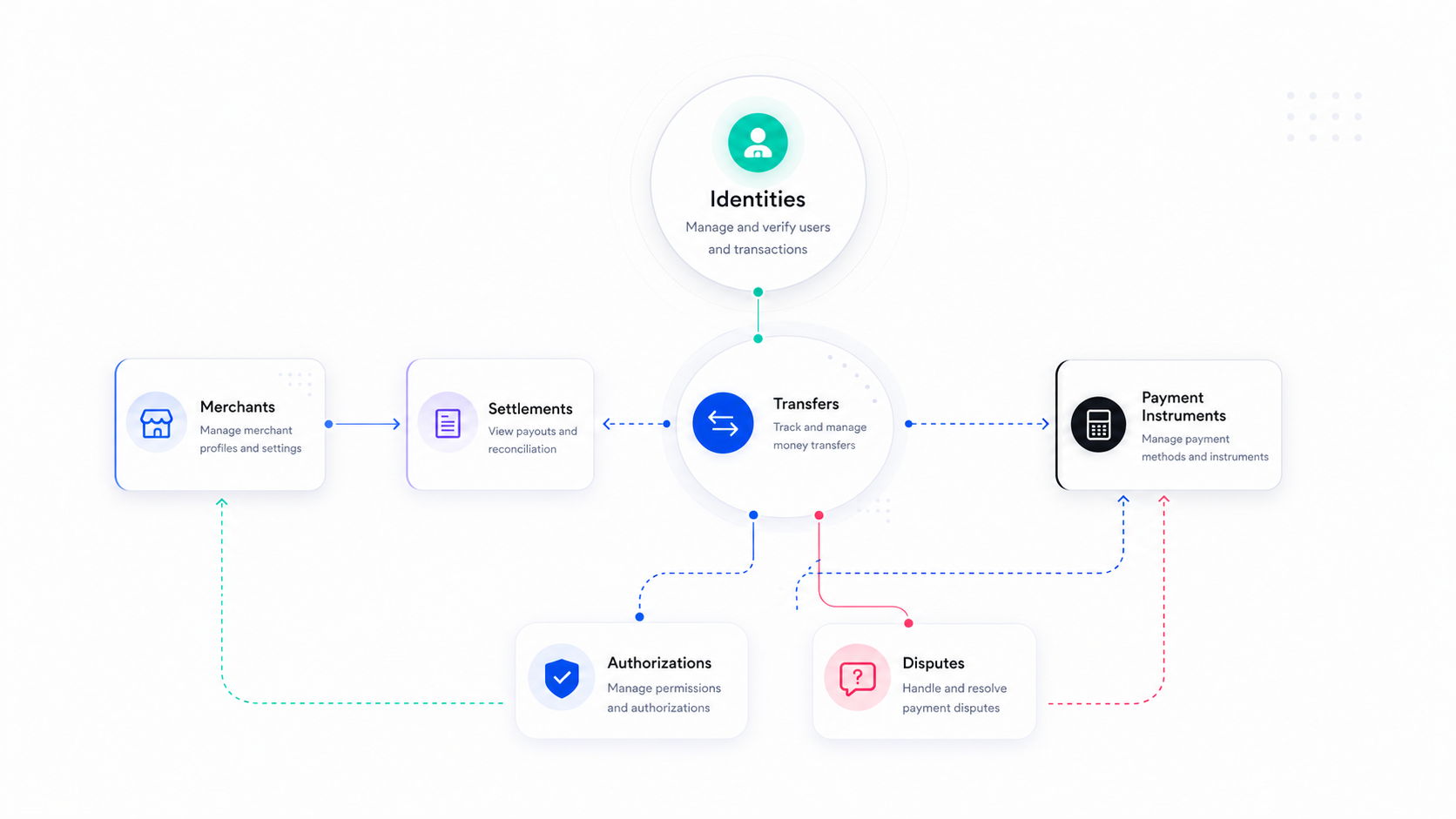
The Transfer resource represents any money movement from one Payment Instrument to another. For example, a Transfer can be a credit to a bank account, or a refund to a card. Transfers appear on the HL Hunt Dashboard under Transactions.
Transfers can have one of three types, each indicating a different funds flow:
- DEBIT: Created after capturing Authorizations or creating ACH payments where funds are pulled from the issuer into the settlement account.
- REVERSAL: Represent refunds or chargebacks where funds are returned to customers.
- CREDIT: Created when funds are transferred to a merchant's bank account when paying out settlements.
Transfers can have five possible states:
| State | Description |
|---|---|
| PENDING | The Transfer is still processing. |
| SUCCEEDED | The Transfer was successful and funds will soon be available for payout. |
| FAILED | The Payment was declined. See failure_code for details. |
| CANCELED | There was an issue with the processor. Contact support. |
| UNKNOWN | A connection or timeout issue occurred. Reattempt the Transfer. |
Settlements

The Settlement resource represents a batch of Transfers that will get paid out to a Merchant. Merchants (i.e., sellers) are paid out when HL Hunt approves them. For more information, see Payouts.
Users
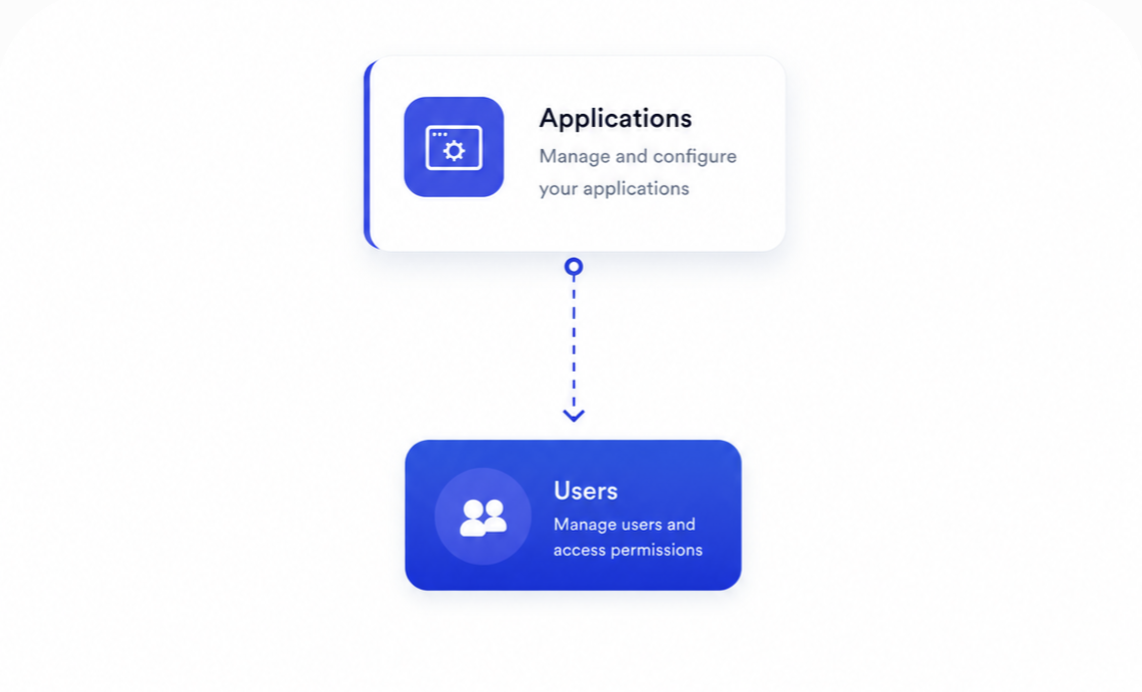
A User represents:
- Dashboard User
- API User
To create a Dashboard user, navigate to Team in your HL Hunt Dashboard and invite new members.
Account Structure
HL Hunt enables many payment flows but the key account relationships start with your Application which is your main account. Your Application will have many Identities for your buyers and sellers or service providers.
- For buyers: their Identities will have one or more Payment Instruments for each payment method they save with you.
- For sellers/merchants: their Identities will have one or more Payment Instruments for the bank account their funds are paid out to. Additionally, they will have a Merchant resource for each payment capability you enable for them.